Bring Fresh Flavor to Small Spaces
A sunny windowsill or patio corner can become a beautiful, useful herb garden with just a few containers and the right plants. Herbs add color, texture, and fragrance to your home while keeping fresh leaves within easy reach for cooking.
You do not need a large yard or elaborate equipment to get started. Most culinary herbs grow well in pots as long as they receive enough sunlight, have good drainage, and are watered consistently. With a little planning, even a narrow ledge or unused corner can become a lively green display.
Choose the Best Location
Most herbs prefer at least six hours of bright sunlight each day. A south-facing window is often ideal indoors, while east- or west-facing windows can also work well. Outdoors, look for a patio corner that receives plenty of direct sun but offers some protection from strong wind.
Before arranging your garden, observe the space throughout the day. Notice how sunlight moves across the area and whether nearby walls or railings create shade. This simple check will help you select plants that are more likely to thrive.
Keep these points in mind:
– Choose a spot with bright, direct light.
– Avoid areas exposed to constant drafts or strong wind.
– Make sure water can drain away easily.
– Place herbs where you can reach them without difficulty.
– Keep indoor pots away from heating vents and cold glass during winter.
A convenient location also makes regular care easier. When herbs are close to the kitchen or a favorite outdoor seating area, you are more likely to notice when they need water or trimming.
Select Herbs That Match Your Space
Different herbs have different growing habits, so choose varieties that suit the size and conditions of your garden.
Excellent Herbs for Sunny Windowsills
Compact herbs are especially useful indoors. Consider:
– Basil: A bright green favorite that grows quickly in warm, sunny conditions.
– Chives: Neat and grasslike, with purple flowers when allowed to bloom.
– Parsley: A leafy herb that grows well in a deep container.
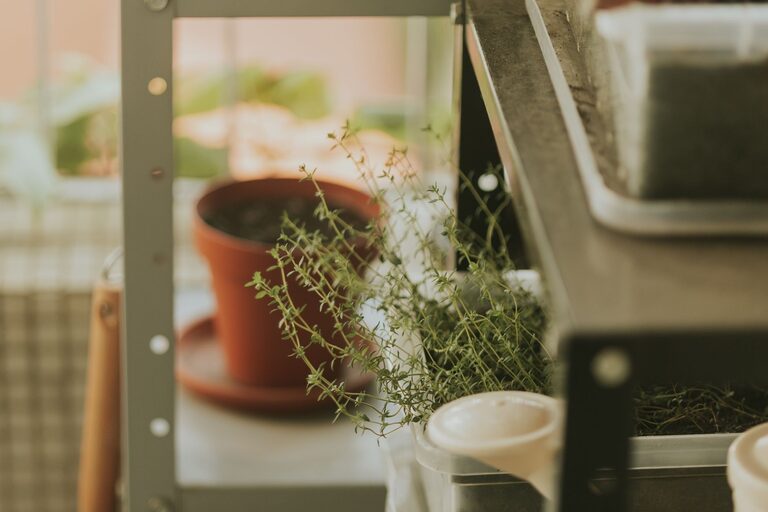
– Thyme: Low-growing and compact, with small fragrant leaves.
– Oregano: Easy to trim and useful for adding flavor to many dishes.
– Mint: Fragrant and vigorous, but best kept in its own pot.
Basil and parsley create a lush appearance, while thyme and oregano add a softer, trailing texture. Chives bring height without taking up much space.
Great Herbs for Patio Corners
Outdoor spaces give you more room to combine herbs with flowers and decorative plants. Rosemary, sage, lavender, and lemon balm can make a patio garden feel full and fragrant. Larger pots can support several plants, but be sure that the herbs have similar water and sunlight needs.
Rosemary and lavender prefer drier soil between waterings. Basil and parsley generally appreciate more consistent moisture. Grouping plants with similar needs will make care simpler and help prevent overwatering or underwatering.
Pick Containers with Style and Drainage
Containers are an important part of the garden’s appearance. Matching pots create a calm, organized look, while a mix of materials can give the space a relaxed, collected feel.
Good container choices include:
– Terracotta pots for a classic, warm appearance
– Ceramic pots for color and decorative detail
– Metal containers for a modern look
– Wooden boxes for a natural, rustic style
– Hanging baskets for trailing herbs and vertical interest
Every container should have drainage holes. Without them, excess water can collect around the roots and cause problems. Place a saucer beneath indoor pots to protect the windowsill, but empty the saucer after watering so the container does not sit in water.
Choose a container that gives the herb enough room to grow. A pot that is too small can dry out quickly, while an oversized container may hold more moisture than the plant needs. As a general rule, select a pot slightly larger than the plant’s current root ball and move it up in size when the roots become crowded.
Create an Attractive Arrangement
A beautiful herb garden benefits from a little design planning. Start with the tallest plants at the back and place shorter or trailing herbs near the front. This arrangement allows each plant to receive light while creating a layered display.
For a windowsill, try a row of three matching pots. Use a taller herb such as parsley or basil in the center, with thyme or chives on either side. If the ledge is narrow, choose small pots and keep the arrangement simple.
On a patio, use a small plant stand, shelf, or tiered ladder to add height. Place larger containers on the floor and smaller pots on upper levels. A shallow bowl of pebbles, a small watering can, or a decorative label can add finishing touches without making the display feel crowded.
Leave enough space between pots for air to move around the leaves. Good spacing also makes it easier to water, trim, and inspect the plants.
Use the Right Potting Mix
Herbs grow best in a light, well-draining potting mix. Choose a quality mix made for containers rather than heavy garden soil, which may compact in a pot and limit drainage.
For herbs that prefer drier conditions, such as rosemary, thyme, and lavender, consider mixing in a small amount of material that improves drainage. Always follow the instructions on the product you choose, and avoid making the soil so loose that it dries out immediately.
Refresh the top layer of potting mix each season. If a plant has been in the same container for a long time, it may benefit from being repotted into fresh mix and a slightly larger pot.
Water and Trim Regularly
Container herbs depend on you for consistent care. Check the soil with your finger before watering. If the top inch feels dry, water slowly until a little moisture runs from the drainage holes. If the soil still feels damp, wait another day or two and check again.
Sunny windowsills may cause pots to dry faster than expected, especially during warm weather. Outdoor containers can also lose moisture quickly in wind or heat. At the same time, avoid watering on a fixed schedule without checking the soil, since conditions change throughout the year.
Regular trimming keeps herbs compact and encourages new growth. Harvest a few leaves at a time instead of removing most of the plant at once. For leafy herbs such as basil and mint, pinch just above a pair of leaves. Remove dry or yellowing leaves to keep the display fresh.
Add Seasonal Interest
An herb garden can change with the seasons. In spring and summer, add bright pots or flowering herbs such as chives and lavender. In fall, combine herbs with small ornamental peppers or seasonal foliage. During colder months, move tender herbs indoors or protect outdoor containers when temperatures drop.
You can also grow new plants from cuttings or seeds, depending on the herb. Starting a second round of basil, parsley, or cilantro can keep the garden productive when older plants begin to fade.
Enjoy the Garden Every Day
The best herb garden is one that becomes part of your routine. Snip basil for a simple pasta dish, add chives to breakfast, or rub a sprig of rosemary between your fingers as you pass by. These small daily moments make a windowsill or patio corner feel more connected to nature.
With sunny placement, suitable containers, and regular attention, a compact herb garden can be both practical and beautiful. Start with a few dependable plants, arrange them thoughtfully, and allow the garden to grow with your space and style.
About the Author